← Unit 1

Venomous Creatures in Australia

Australia’s wildlife – how dangerous is it really?

Open on your phone

Scan the QR code to open this page directly.

🐍 🕷️ 🪼 Many people think that Australia is full of deadly animals. Is that true? Let’s find out – one fact at a time.

Step 1 · True, false – or surprising?

  1. Read the fact and guess the answer with your partner.
  2. Click 👀 Reveal and find out.
  3. Talk about it – start the timer and talk for one minute. Then go to the next fact.

Useful phrases: I think it’s true / false because … · I would never have guessed that … · I was surprised that … · I’m (not) afraid of … because …

Step 2 · Read and find out more

Now you know some surprising facts. Let’s read more about Australia’s venomous creatures!

  1. Download the worksheet below and add it to your GoodNotes folder. Work on it there.
  2. Read the text in your book on page 14.
  3. Answer the questions on the worksheet with the help of the text.

Loading the worksheet …

Step 3 · Job advert: Spider catchers wanted! 🕷️

Read the job advert. Would you apply?

📍 Sydney, Australia · summer job

WANTED:
SPIDER CATCHERS!
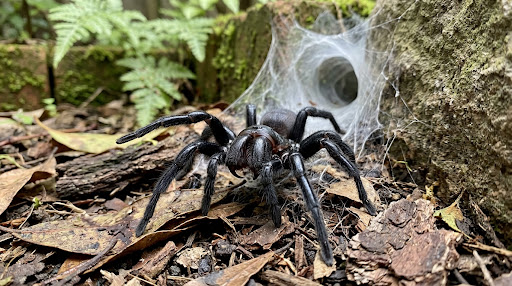
Are you brave? Do you want to help save lives?

A black Sydney funnel-web spider in front of its funnel-shaped web
Have you seen this spider? 👀 The Sydney funnel-web lives in a funnel-shaped web.

🕷️ Your job

  • Look for Sydney funnel-web spiders in gardens, under rocks and in garages.
  • Catch the spider carefully in a strong glass jar.
  • Bring it to a collection point.

✅ You should be …

  • brave – but also careful and calm
  • good at following rules
  • interested in animals and science

💉 Why do we need you?

Our keepers “milk” the spiders – they collect their venom. From the venom, scientists make antivenom. Since it was introduced in 1981, no one in Australia has died from a funnel-web bite!

⚠️ Safety rules: Never touch the spider with your hands! Wear gloves and shoes. Use a jar and a spoon. Ask an adult to help you.

✉️ Interested? Apply now!

ℹ️ This advert was made for our lesson – but it is based on a real campaign: every summer, the Australian Reptile Park near Sydney asks people to bring in funnel-web spiders for its antivenom programme.

My application

Write a short application (4–5 sentences): Who are you? Why do you want the job? Why are you the right person? Or explain why you would never apply! 😉

Useful phrases: Dear Sir or Madam, · I would like to apply for the job as … · I am … years old and … · I think I am the right person because … · I am not afraid of … · Yours faithfully,

Step 4 · Calm finish: Who am I?

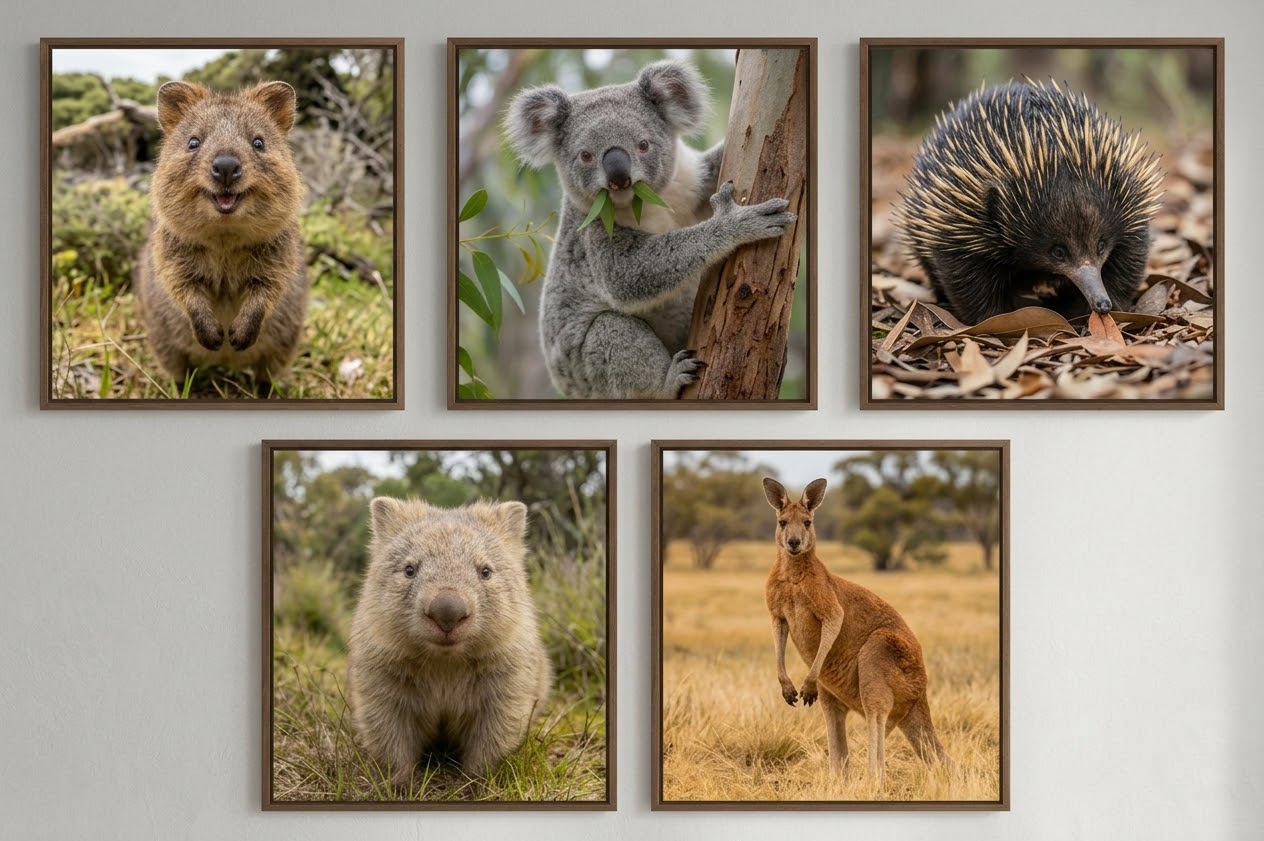
Not all Australian animals are dangerous – many are cute and very special. Read the riddle, guess with your partner, then tap to find out. 🐨

1. I sleep up to 20 hours a day and I eat only eucalyptus leaves. Who am I?

🐨 I’m a koala! Eucalyptus leaves give me very little energy – so I sleep a lot.

2. My poo is shaped like little cubes. Who am I?

🟫 I’m a wombat! Scientists still find it amazing how my body makes cube-shaped poo.

3. I’m called “the happiest animal in the world” because I always seem to smile. Who am I?

😊 I’m a quokka! You can meet me on Rottnest Island near Perth – lots of tourists take selfies with me.

4. I’m a mammal, but I lay eggs – and I’m covered in spikes. Who am I?

🦔 I’m an echidna! Only two kinds of mammals lay eggs: the echidna and the platypus.

5. I can jump very far, but I find it very hard to walk backwards. Who am I?

🦘 I’m a kangaroo! Together with the emu, I’m on Australia’s coat of arms. People like to say it’s because we both only move forward!
Extra task · Just for fun: Venomous or not?

⭐ Extra task – only if you have time left. Just for fun!

📖 Three words – what’s the difference? An animal can be more than one!

  • venomous = an animal injects its venom with a bite, a sting or a spur. The funnel-web spider is venomous.
  • toxic (= poisonous) = an animal is harmful if you touch or eat it. The skin of a cane toad is toxic.
  • dangerous = an animal can kill or seriously hurt people – with teeth, claws, its size or venom. A crocodile is dangerous, but it is not venomous.

Sort the animals: are they venomous or not venomous? Careful – dangerous doesn’t always mean venomous! 🐊 Play against your partner: who gets more right?

Correct: 0 / 0
Why? – the explanations
  • Venomous animals inject venom with a bite, a sting or a spur – like snakes, spiders, jellyfish, the blue-ringed octopus, the stonefish and the male platypus.
  • Saltwater crocodiles, sharks, cassowaries and dingoes can be dangerous – but they are not venomous. They are dangerous because of their teeth, claws or size.

Extra task 2 · Toxic, venomous or dangerous?

⭐ Extra task – only if you have time left. Just for fun!

Drag each animal into all the boxes that fit – some animals fit into two boxes, and some fit into none (leave them where they are).

📖 Three words – what’s the difference? An animal can be more than one!

  • venomous = an animal injects its venom with a bite, a sting or a spur. The funnel-web spider is venomous.
  • toxic (= poisonous) = an animal is harmful if you touch or eat it. The skin of a cane toad is toxic.
  • dangerous = an animal can kill or seriously hurt people – with teeth, claws, its size or venom. A crocodile is dangerous, but it is not venomous.
Why? – the explanations
  • 🐍 🕷️ 🪼 🐙 🐟 Snakes, the funnel-web, the box jellyfish, the blue-ringed octopus and the stonefish are venomous and dangerous – their venom can kill people.
  • 🦆 The male platypus is venomous – but a sting is “only” very painful, so it is not really dangerous.
  • 🐸 🐡 The cane toad and the pufferfish are toxic: they are harmful if you touch or eat them – but they don’t bite or sting.
  • 🐊 🦈 🐦 Crocodiles, sharks and cassowaries are dangerous because of their teeth, claws or size – but not venomous.
  • 🐨 😊 Koalas and quokkas are none of these – they stay in the box at the top!